
The attic tells the direction
A stained streak on one face of a timber, wet batting in a single bay, corrosion on a shank — each of those aims uphill, away from whatever is marked on the ceiling below.
Roof Leak Repair
A sealed patch over a likely-looking spot is a guess with a receipt attached. The opening gets located and photographed first.
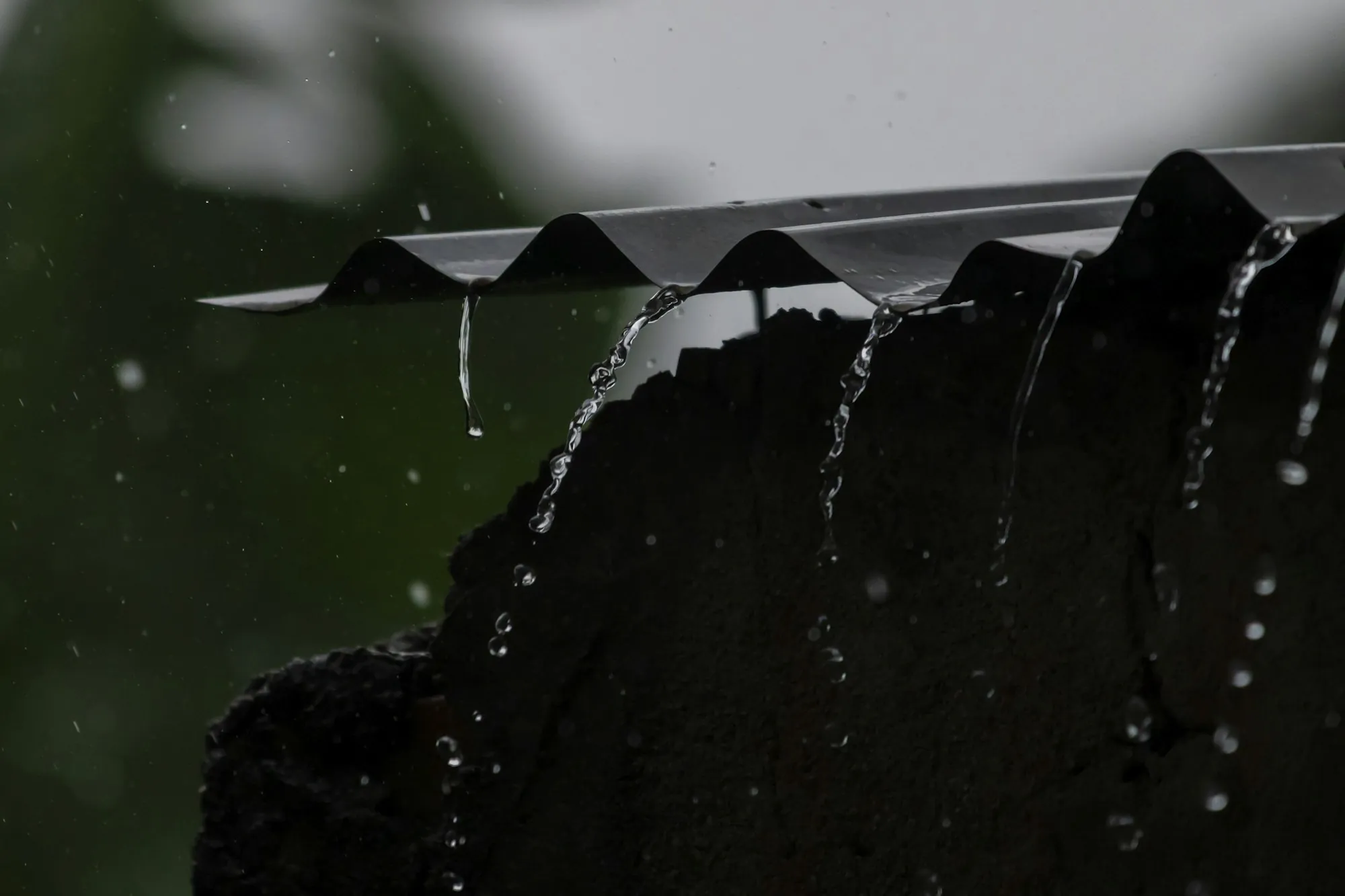
Water through a covering never drops vertically. Felt, board, timber and insulation each tilt somewhere, and the water takes whichever of them leans away from the hole. A single bay between rafters will move it a surprising distance before a ceiling joint finally releases it. The mark downstairs therefore records where the journey ended. Reading it as a map is how people pay for the same leak twice; the job is to walk that journey backwards until the hole is in front of a lens.
A stained streak on one face of a timber, wet batting in a single bay, corrosion on a shank — each of those aims uphill, away from whatever is marked on the ceiling below.
Anything coming through the covering, the valleys, every slope-to-wall meeting, the counterflashing at a stack and the first three feet above the gutter together account for nearly all of them. Plain field shingle is examined last, because it is hardly ever responsible.
Where the loft leaves it open, water goes on deliberately — one band at a time, working from the gutter upward, with somebody inside watching. Tedious, and it finds what no amount of looking will.
A ridge of sealant across a flashing is a previous answer. It gets lifted and inspected, because a failure hiding under somebody's patch is the commonest dead end on this job.
You receive a list of everywhere examined, everything now eliminated, and what would come next — with nothing charged for the visit. It happens rarely. It is also preferable to a confident bead of sealant and a bill, because sealant in the wrong place costs you both the money and the rest of the wet season.
One wet season is a flashing repair. Two and the decking is on the invoice as well.