
Every slope, walked where the pitch allows
Granule cover, how the mat flexes, previous patching and how the fasteners are behaving are things you establish underfoot. An aerial picture shows colour and very little else.
Roof Inspections
Free, roughly forty minutes, and it leaves you with a file rather than an opinion — useful at a sale, a claim or a second quote.
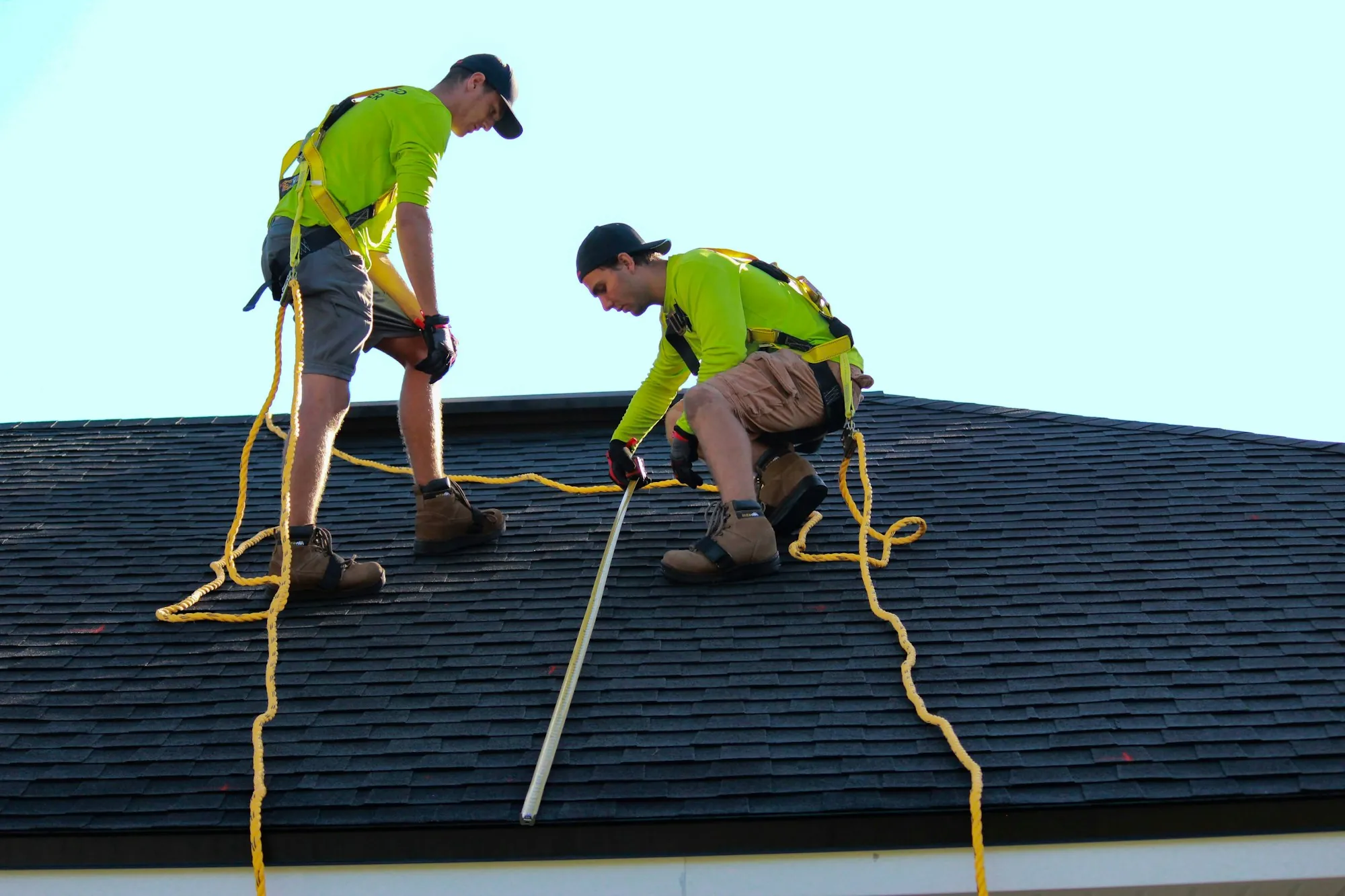
A verbal verdict evaporates the moment the van leaves. A dated file with photographs does three jobs instead: it tells you what is there now, it gives a baseline so the next look can show what changed, and it answers a buyer's inspector or an adjuster without anybody having to take your word for it. Producing it costs us an hour and nothing else, which is why it is free and why you keep it whether or not we ever do work on the house.
Granule cover, how the mat flexes, previous patching and how the fasteners are behaving are things you establish underfoot. An aerial picture shows colour and very little else.
Valleys, chimneys, sidewalls, vent stacks and boots get their own frame, because this is where almost every roof actually fails.
The quantity of granule that has come off the slopes and collected there is one of the better readings of how much life a covering has left.
Staining, daylight, damp insulation and rusted nail shanks separate an active problem from an old one and say whether the assembly is breathing.
Not a pass or a fail but a short list — this valley, that boot, the north face — with a rough timeframe for each, so a future call has a starting point.
An inspection reports what is visible and reachable on the day. It cannot see under an intact covering, it cannot open a finished attic, and it cannot promise that a sound roof will not meet a bad enough storm. Where access limits what could be checked, the file says so rather than quietly leaving the gap out.
Free, thorough, photographed, and still useful two years from now.