
Diagnosed in one visit, not two
The roof is walked, the junctions are photographed and the attic is looked at while somebody is already here. Nobody comes back a second time to work out what is wrong before they can tell you what it costs.
You find out what the roof needs before you find out what it costs — replacements, repairs, siding and drainage across Pine Hill and along the White Horse Pike.

Each one has a page that sets out the scope, the exclusions and the point at which we would tell you to leave it be.
Every layer renewed and every exclusion written down, so the final invoice holds no surprises.
Read more →A diagnosis first, then a price — and sometimes the diagnosis is that it can wait.
Read more →Found and proved with photographs, or nothing charged for the attempt.
Read more →Evidence gathered first, and an honest answer about whether there is a claim at all.
Read more →Forty minutes, a photograph of every junction, and a written note of what to watch.
Read more →Cladding, the barrier under it and the metal at every opening, handled as one job.
Read more →Measured against the roof that feeds them, pitched so they drain, and emptied past the backfill.
Read more →None are difficult. They are simply rarely all present on the same estimate.
The roof is walked, the junctions are photographed and the attic is looked at while somebody is already here. Nobody comes back a second time to work out what is wrong before they can tell you what it costs.
Framing, interior repairs, chimney masonry and anything wanting an engineer appear on your sheet as excluded, each with a note on what it would run if it turned up. A quote that lists only inclusions is a quote with room to move.
No deposit at signing. The payment schedule sits on the estimate from the first version, tied to things that visibly happen rather than to dates.
A callback goes to the people who did the work rather than to whoever is free. It makes the second visit short and it makes the first one careful.
No figure comes off a satellite measurement or a walk round the garden. Penetrations are counted individually because they drive both the price and the time.
Where the mark is, when it showed, what the sky was doing. A useful share of calls narrow to a likely cause before anyone drives out, which decides what comes on the van.
Slopes walked, junctions photographed one by one, attic checked if there is a hatch. Free, and the file is yours regardless of what you decide.
Quantities, rates, the photograph behind each line, the exclusions, and the payment schedule — all before anything is agreed.
Permit filed under our name with the fee shown at cost, waste leaving as it comes down, and a magnet across every surface a nail could have reached.
In most of this trade the person who tells you what is wrong is paid on what you buy. That is not a conspiracy, it is just an incentive, and it explains why so many homeowners are told a roof is finished when it has six seasons left. Separating the two is simple in practice: the visit costs nothing either way, the photographs are handed over either way, and if the honest answer is that nothing needs doing yet, that answer is free to give. The business then lives on the jobs that genuinely need doing, which is a slower way to grow and a much easier one to keep.
Pine Hill and the Camden County boroughs along the Pike. Close by and not on the list? Ring and ask.
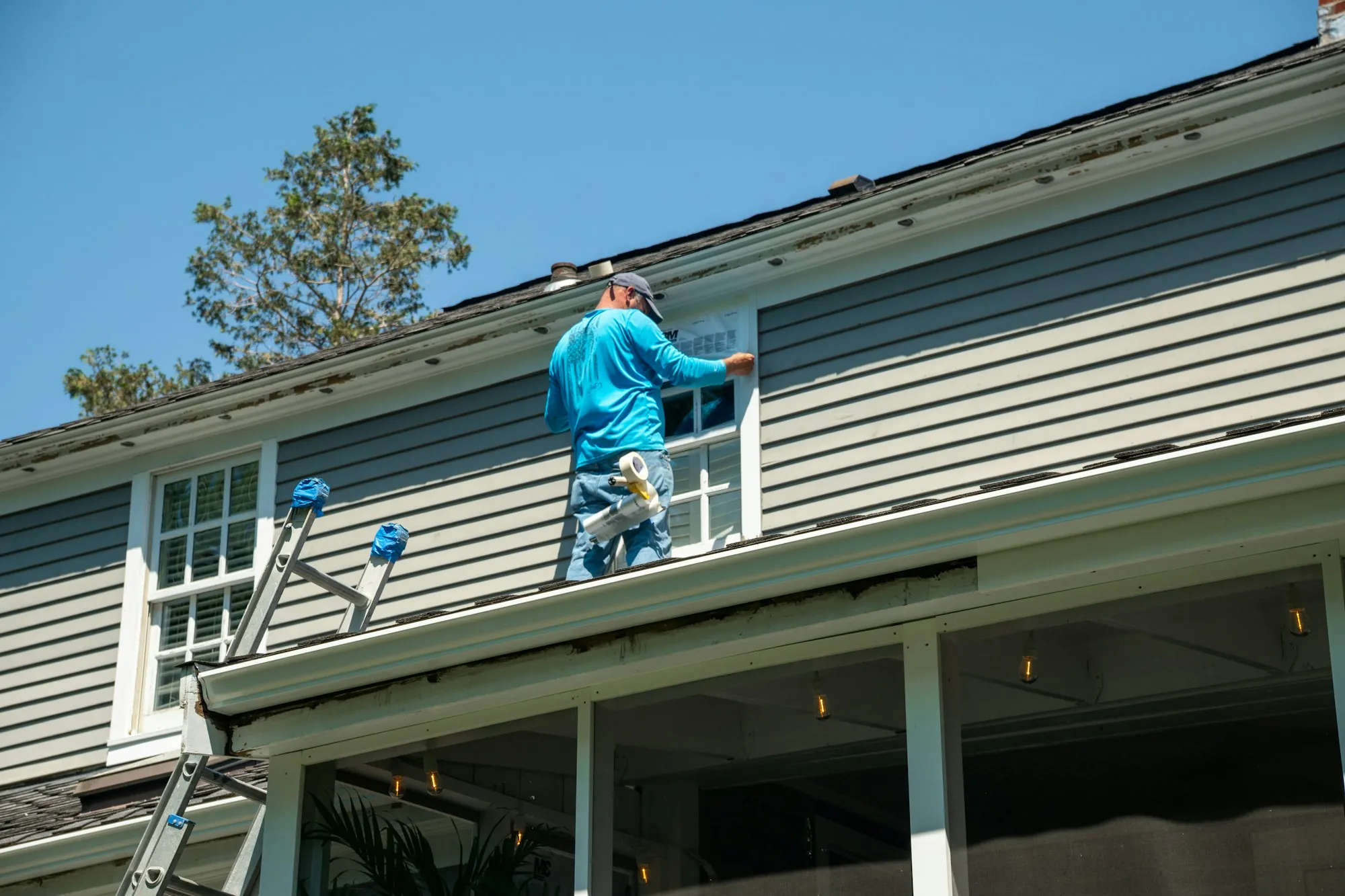
Somebody climbs up, photographs the lot and tells you plainly. Then, and only then, a price if there is work worth doing.
Anyone quoting a figure before seeing the house is quoting a range wide enough to be useless. What moves the number is measurable: the squares of roof area, the pitch, the number of layers coming off, the count of penetrations, how much sheathing has gone soft, and how far waste has to be carried to reach the container. All six are settled during the free visit, and the written estimate that follows prices each of them separately so you can see where the money is going rather than being handed one total.
What settles it is whether the trouble sits in one place or across the whole covering. A destroyed valley, perished boots, step flashing that has given up, or wind damage confined to one exposed face are local, and on an otherwise sound covering they are straightforward work. A covering shedding granule from all four faces, a mat too brittle to lift, fasteners tenting across whole slopes, or a second layer baking the one beneath it are systemic, and patching will not outrun any of them. A further rule of thumb: when a repair would cost more than about a fifth of a replacement on a covering past two-thirds of its life, the repair is usually the worse buy.
Claim when there is a specific, dateable weather event behind the damage and the repair would clearly exceed your deductible. Pay when the roof is simply worn, because age is not a covered peril and a denied claim still sits on your record. The grey area is a storm that caused some real damage to a roof that was already old; in that case the insurer typically covers the damage rather than the renewal, and the difference comes to you. We will document what is there either way and tell you honestly which column we think it falls in.
Usually closely, rarely exactly. Shingle colours are blends of granules that shift between production runs, and a roof that has been up for ten years has faded on the elevations that see the most sun. A repair on a rear or side slope generally disappears. One on the elevation facing the street may be visible in certain light, and if that matters to you it is worth saying before the work rather than afterwards. Where an exact match is impossible we will show you the nearest option and let you decide.
We do. The application goes in under our name because the work is ours to stand behind, and the municipal fee is passed through on your invoice at exactly what it cost with the receipt attached rather than marked up into a line called permits and fees. Somebody from the crew is here when the inspector comes. A contractor who suggests skipping the permit is suggesting you take on the liability for unpermitted work on your own house.
Three things, and all three matter more at a sale than they do the week after the job. The photographs: deck condition once the covering was off, which sheets were replaced, every junction before and after. The permit record, including the closed inspection, because a buyer's attorney will look for it. And the itemised final invoice, which shows what was actually fitted rather than what was advertised. Those three together answer almost every question a buyer's inspector raises, and reassembling them years later is close to impossible.
Ask for the exclusions, not the inclusions — a contractor who will not put in writing what is outside the job is leaving himself room. Ask what happens if the deck turns out to be soft and listen for a per-sheet rate rather than a reassurance. Ask when payment is due and be wary of a large deposit at signing. Ask who is actually on the roof. And ask for photographs of a finished job's flashing details rather than of a finished roof, because the shingles always look fine and the metal is where the work shows.
Up a ladder, with a camera, while the figure is still unwritten.